In the Berlin-Brandenburg metropolitan region, climate adaptation is more than a policy goal; it is a necessity. We spoke with the leader of the Continental demo site, Nasrin Haacke, to learn how the IMPETUS project is strengthening urban water resilience in one of Europe’s most dynamic urban landscapes. From pioneering open-source modelling tools to fostering collaboration across sectors, the Berlin demo site is translating climate ambition into action.
According to the European Committee of the Regions, 90% of climate change adaptation measures are undertaken by local and regional authorities. Looking at your own region, do you think the local authorities have the resources to implement these measures? What do you think they are missing?
NH: “In the Berlin-Brandenburg metropolitan region, local authorities are very much at the forefront of climate adaptation. Berlin, for example, has developed key strategies like the Urban Development Plan Climate 2.0, and offers targeted funding through programmes such as BENE II. That shows there’s a clear political will to act, especially on issues like urban heat, stormwater management, and green infrastructure.
But when it comes to implementation, many challenges remain. One of the biggest challenges is that adaptation work is often funded through short-term projects. That makes it hard to build lasting institutional capacity or to carry measures beyond the pilot phase. On top of that, many local administrations lack the technical expertise and staffing needed to develop and manage complex, cross-sectoral adaptation strategies. And in a city like Berlin, where responsibilities are divided between Senate departments and the district level, coordination isn’t always easy. We also still lack a comprehensive system to monitor the effectiveness of adaptation measures or share experiences in a structured way.
That’s where research projects such as IMPETUS can make a real difference. In Berlin, the project is helping to strengthen urban water resilience by combining long-term planning with technical innovation and participatory processes. It brings together local authorities, utilities, and researchers, and helps close some of the capacity and coordination gaps.
Progress has definitely been made, but to scale up adaptation effectively, we need more stable funding, more people on the ground, and stronger institutional frameworks. That’s where continued support at national and EU level is really key.”
Have locals, policymakers or businesses generally become more vocal about changes in their environment due to climate change?
NH: “Yes, particularly among policymakers and technical stakeholders in Berlin, awareness of climate-related environmental changes has grown noticeably. Increasingly frequent droughts, heatwaves, and heavy rainfall events have made the impacts of climate change more visible and have pushed adaptation higher on the political agenda. This is reflected in strategic planning efforts such as the Urban Development Plan Climate 2.0 and the cross-sectoral Masterplan Water, which addresses future challenges for Berlin’s water supply under climate stress.
In the IMPETUS project, we work closely with local authorities, utilities, and expert stakeholders. Through these interactions, we have seen that climate-related concerns are increasingly discussed and that there is a growing openness to integrated, long-term adaptation planning. While we have not directly engaged with residents ourselves, our stakeholder engagement formats have shown that dialogue across sectors helps foster a shared sense of urgency and strengthens commitment to action.”
You have been developing climate adaptation packages in the project. Is there one measure that has stood out to you, or that you’re most proud of?
NH: ”One measure we’re particularly proud of is the Berlin Water Model. It was developed specifically within the project with the support of one of our local partners, BWB (Berlin waterworks), and is something we’re planning to continue using and refining well beyond its lifetime.
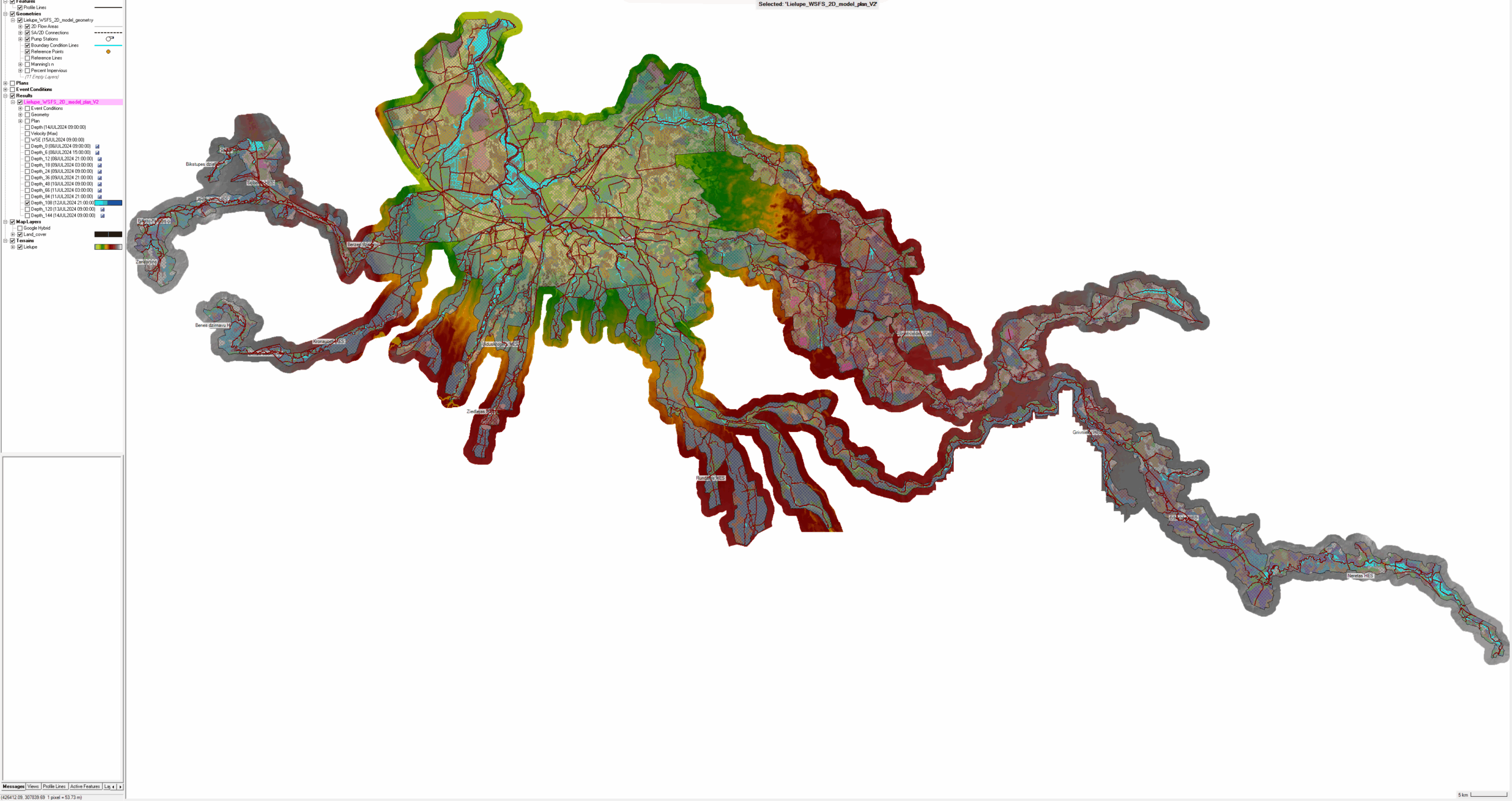
The model brings together a wide range of data, i.e. on stormwater, surface water, groundwater, and treated wastewater, covering both quantity and quality aspects. It integrates inputs from multiple disciplines and teams, which made it possible to build a tool that’s technically robust and practical to use.
Its map-based visualisation makes it especially helpful for communication, whether with decision-makers or the broader public. And since it’s open-source and available via GitHub, it’s designed to be a practical resource for authorities and utilities who want to explore future scenarios or assess the potential impact of measures.
The model really reflects the strong collaboration across sectors that we’ve had in the project, and that’s something we’re genuinely proud of.”
What are the next steps for your demo site, and for your research?
NH: “Another priority is to build on the strong relationships we’ve developed with local stakeholders during the IMPETUS project. Maintaining and deepening this collaboration beyond the project’s lifetime will be key to ensuring that research insights translate into long-term impact.
For the Berlin demo site, the immediate next step is to finalise and validate the Berlin Water Model (BWM). This tool will support decision-makers, such as the Senate, with quick and accessible assessments of how future developments and measures might affect surface water systems. It’s an important step toward strengthening Berlin’s overall water resource strategy in the face of growing climate pressures.
Looking beyond that, a key task will be to identify remaining knowledge and implementation gaps, and to actively work on closing them. As is often the case in applied research, the project has raised as many new questions as it has answered, for example, around the role of groundwater modelling. We see this not as a setback but as a valuable starting point for continued work on water resilience and governance under climate stress.
Another major priority is to build on the strong relationships we’ve developed with local stakeholders throughout the IMPETUS project. Keeping this collaboration going will be essential to ensuring that our research has lasting, real-world impact.”
Many other European cities face water shortages in the future. Are there researchers/authorities that you have worked with facing similar issues? What do you feel is the benefit from working together on this?
NH: “Water scarcity is a common concern, but it shows up in very different ways across Europe. In Berlin, the situation isn’t as acute as, say, in the Mountain demo site in Northern Italy, where there’s strong competition between agriculture, ecosystems, and drinking water users.
That said, the exchange within the IMPETUS project has still been really valuable, especially when it came to developing our adaptation pathways. We learned a lot from how other demo sites approached the design of indicators and assessment tools, particularly for evaluating how different measures affect water quantity and quality. That input helped us shape a more structured and transparent methodology in Berlin.
Even if direct transfer isn’t always possible, learning from other regions’ strategies and reasoning has been a real asset for us—not least because it helps us anticipate potential challenges and design measures that reduce the risk of future competition over water resources.”
The Berlin Water Model is just one example of how research-driven tools and strong local partnerships can shape the future of urban adaptation. As Nasrin explains, the path forward lies in building on the strong stakeholder relationships developed throughout IMPETUS, closing implementation gaps, and refining the tools that support climate-smart decisions. With urban water systems under growing pressure across Europe, the work underway in Berlin offers valuable lessons and a strong foundation for long-term resilience.